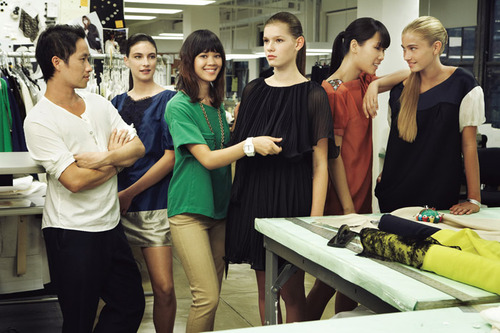
Fashion in the modern world is an inescapable evil, pervading every sector of life. No matter where you turn, you will be bombarded by advertisements for the latest styles, tips on how to look like celebrities, or you can even catch a glimpse of the walking fashion billboards known as teenagers. With all these fashion trends around you, it can be overwhelming, and maybe you’ll decide to back off, stop worrying about fashion for a little while, and just do your own thing. Well, the world of fashion is a fickle mistress, and that “inescapable” up above was not just
It used to be that the highlight of fashion and the knowledge of all the latest fashion trends was based solely in the really big fashion centers, the obvious ones that everyone knew; Paris, Milan, and so forth. If you really considered yourself on top of the fashion world, you kept up with what people were seeing at fashion shows in these cities, you kept up with all the fanciest dresses and nicest suits, all in the name of fashion. Ostensibly, that is still true today. If you want the newest in high fashion, you follow the same cities as always. Sure, maybe the newest in high fashion is a bit stranger than it used to be – a bit more angular, a bit more revealing, a bit less possible to wear in public (to be blunt) – but fashion changes with the times like anything else does. But notice that the above example is in high fashion, “high” being the keyword. If you want to be fancy, you wear this stuff. But fashion isn’t just runways and celebrities anymore.
More and more, fashion is starting to include teen culture. And why shouldn’t it? Teens follow the things that are cool and popular in mainstream culture, things that everyone can find something to like in. Failing that, it will appeal to the rebellious nature of teens, ensuring high sales. No matter which, it will be everywhere in culture, that can be guaranteed. Because of this, it must be considered equally important in culture. As you may know, modern teen culture is mostly what used to be/is still considered “emo” or “goth” – wear all black, act like indie band members, be considered cool. Emo and goth have been glorified: where they used to be seen in a negative light, even as signs of depression or other mental issues, the only mental issue they represent now is a severe case of attention-grabbing. But still, teens are where the money is. Whether from their own work or their parent’s paycheck, the teens are the ones spending their time and money in all these stores popping up selling whatever is in the scene.
And teens are as fickle as the fashion industry, doubling the effect of fashion’s fickle nature. See, teens don’t like to look alike unless they look like their friends or idols. So, it’s only natural that the attention seekers will fall in line with many different fashions. Aeropostale, Hot Topic, Hollister… mixing of styles is rare, and rivalries form between teens based on petty things like who’s wearing what best, or who wears what’s more popular.
Where do you Fit in the new Fashion
What does this have to do with you though? We talked about how you’re backing out of the scene, didn’t we? Not quite. You see, fashion is hard to escape. Ads, tips… wait, we went over this. In any case, it seems like the only solution to escaping the cold world of fashion is to stop conforming to the trends. Non-conformism is always a good way of expressing your opinion, usually one of distaste… right? Not so fast. Non-conformism isn’t even a safe bet any more.
It’s been mentioned that teens fall into a lot of different styles, and those styles are at war. But what of those teens that don’t want to fight this war? They fall into non-conformism. Then, all the other sides of the war team up. The non-conformists become the enemy. Those who refuse to fight are shunned, teased, antagonized. Non-conformists are ironically the biggest fashion groups of all. And those who embrace the fashion of having no fashion become hipsters, and hipsters are collectively reviled. You don’t want to become a hipster. They’re the ones that even the outcasts dislike, the butt of all the jokes, the jesters in a court of kings. Stick with non-conformism and keep reading.
So, we’ve established that you aren’t into fashion, and you are not going to become a hipster. You’re stuck then – in the fashion war. Why is this? Simple: because you’re going against the grain. And for teens, against the grain is a way of life. And since teens are the main drive of most fashion in modern times, even adults fall into this. Against the grain is a fashion, so you have absolutely no way out. This leaves you with few options but to jump back in the scene, or to ignore it completely.
Your limited options aside, you need a plan. You really don’t want to follow fashion trends, and that’s reasonable; fashion is a pretty rough world, and one accessorizing mistake can get you shunned. You should accept the fact that there is no external escape from the world of fashion… hell, even in death you get dressed up all fancy for your final sleep. You can’t leave the rat race, so you need some coping mechanisms. So stick with non-conformism, it’s best in the long run; you get to wear what you want, when you want (none of those silly spring fashions being outdated by the time summer comes around), and the best part is that you can claim you aren’t doing it. You can protest fashion, back away from trends, and just say “I’m wearing what I want to wear”. There’s nothing more freeing in the world than realizing that you can be happy even if you can’t escape a bad situation. And fashion is a better situation than most. So give a grin, put on your favorite pants, and get out in the world! You may still be in the rat race, but you’re winning without anyone realizing.
Sunday, 26 August 2012
Friday, 24 August 2012
Dress Fashion Ideas
Nothing is more feminine than a nice dress. Comfortable, diverse, and pretty dresses are a wonderful choice, from bumming around the house to attending an important event. With such a variety of designs, women sometimes find themselves overwhelmed when attempting to choose a dress. As with all clothing, the dress that will look the best is one in which the wearer is most comfortable. These bits of obvious information aside, let’s look deeper into some different fashion ideas for dresses.
Women differ in shapes and sizes. Because of this, a dress which may look stunning on one woman may look horrible on another. Understanding how different dress cuts look on different body shapes will help immensely. The ideal feminine figure is medium-to-tall height, moderate build, and an hourglass shape. It is ideal because only about 2% of the female population actually has a body like this. Different cuts help achieve a visual effect allowing more women to look like ‘ideal’.
If a woman has short legs and a long torso, she will want to create the visual effect of having longer legs and a shorter torso. To achieve this, she will want to choose dresses that draw the eye upward. She can choose dresses with darker bottoms, higher waists, and narrow or a-line cuts. She will also want to accessorize these types of dresses by wearing jewelry and scarves.
For women with balanced body shapes, dresses with one color from the top to the bottom, ones which are fitted through the waist and flow outward, and thin belts are the best styles. Again, a woman would want to accessorize this type of dress using jewelry and scarves which draw the eye upward.
A woman with long legs and a short torso would, likewise, dress differently from the above-mentioned body shapes. She would want to choose dresses which draw the eye downward. She can achieve this by wearing dresses with prints or lighter colors on the bottoms, dresses with a fitted waists and flowing skirts, and simple necklines. Jewelry and scarves that are medium to long lengths help draw the eye downward. Pinstripes, empire and high waists, and wide belts should all be avoided, as they draw unwanted attention to the “wrong” places. Once a woman determines which general cuts and colors work well for her body shape, she should decide which styles and colors are appropriate for her age, skin color, and situation.
Color plays a huge role in choosing a dress. Dresses come in every color and pattern imaginable. In the workplace, conservative is best. A woman who wants to be taken seriously should generally wear neutral colors—blacks, browns, ivories, greens, and so on—in her dresses, and use her jewelry and scarves to add flair and character. An outfit which most workplaces would find acceptable is a nice tailored maroon blazer worn over a khaki-colored dress, and accessorized with turquoise jewelry. She must avoid over-accessorizing her dress. Modesty in accessories and cosmetics is best. On the other hand, a young woman out for a night-out may wear any assortment of brightly colored dresses and jewelry, depending on her taste. A woman with an olive skin tone looks better in dresses with bold colors, such as magenta, whereas a lighter-skinned woman may look better in a yellow dress. Situation and skin tone both have large impacts on what color of dress will look best on each woman. In the same vein as color, women must choose dresses appropriate for their respective ages. A young woman can wear dresses with lower necklines and higher cuts but if an older woman will dress like that, it will look anything but inappropriate.
Dresses come with all types of necklines, waists, lengths, and cuts. Necklines vary from plunging, which look best on small-breasted women, to round and square necklines. The neckline of a dress has the power to make an otherwise unassuming dress look unique and stunning. It is well worth experimenting with different types of necklines and accessorizing each with different types of necklaces. A plunging neckline can be paired well with a long necklace. This breaks up the monotony of the exposed skin. A squared neckline would look best with a shorter necklace, or one with different strands of beads wrapped around the neck. Strong necklines, such as those created by a dress hanging on only one shoulder, should be worn without a necklace.
A dress’s waist creates a visual waistline for the woman. Generally, a woman accessorizes the waist of a dress with belts and scarves. A woman with a wider waist and smaller bust would want to wear a thinner belt and a fitted waist. Conversely, a woman with a naturally narrow waist would want to wear a fitted waist and thinner belt.
The skirt of a dress can dramatically affect its appropriateness for different social settings, as well as add visual interest to the piece. Skirts can be fitted, such as a pencil skirt, flow outward, such as an a-line skirt, short, long, angularly cut, fluted, and so on. The key is to remember that the more dramatic a dress, fewer accessories is needed for it. Dresses with short skirts and dramatic cuts are best served for night life, while more traditional cuts are best for the workplace. This does not mean a dress with a dramatic cut cannot be worn at work, though. It highly depends on the woman, where she works, and how sophisticated the accessories are.
Honestly, there are a lot of dress fashion ideas out there. There is an unlimited supply of cuts, colors, and accessories so the best way to know which fashion and style will work for you is simply to go out there and see for yourself!
Women differ in shapes and sizes. Because of this, a dress which may look stunning on one woman may look horrible on another. Understanding how different dress cuts look on different body shapes will help immensely. The ideal feminine figure is medium-to-tall height, moderate build, and an hourglass shape. It is ideal because only about 2% of the female population actually has a body like this. Different cuts help achieve a visual effect allowing more women to look like ‘ideal’.
If a woman has short legs and a long torso, she will want to create the visual effect of having longer legs and a shorter torso. To achieve this, she will want to choose dresses that draw the eye upward. She can choose dresses with darker bottoms, higher waists, and narrow or a-line cuts. She will also want to accessorize these types of dresses by wearing jewelry and scarves.
For women with balanced body shapes, dresses with one color from the top to the bottom, ones which are fitted through the waist and flow outward, and thin belts are the best styles. Again, a woman would want to accessorize this type of dress using jewelry and scarves which draw the eye upward.
A woman with long legs and a short torso would, likewise, dress differently from the above-mentioned body shapes. She would want to choose dresses which draw the eye downward. She can achieve this by wearing dresses with prints or lighter colors on the bottoms, dresses with a fitted waists and flowing skirts, and simple necklines. Jewelry and scarves that are medium to long lengths help draw the eye downward. Pinstripes, empire and high waists, and wide belts should all be avoided, as they draw unwanted attention to the “wrong” places. Once a woman determines which general cuts and colors work well for her body shape, she should decide which styles and colors are appropriate for her age, skin color, and situation.
Color plays a huge role in choosing a dress. Dresses come in every color and pattern imaginable. In the workplace, conservative is best. A woman who wants to be taken seriously should generally wear neutral colors—blacks, browns, ivories, greens, and so on—in her dresses, and use her jewelry and scarves to add flair and character. An outfit which most workplaces would find acceptable is a nice tailored maroon blazer worn over a khaki-colored dress, and accessorized with turquoise jewelry. She must avoid over-accessorizing her dress. Modesty in accessories and cosmetics is best. On the other hand, a young woman out for a night-out may wear any assortment of brightly colored dresses and jewelry, depending on her taste. A woman with an olive skin tone looks better in dresses with bold colors, such as magenta, whereas a lighter-skinned woman may look better in a yellow dress. Situation and skin tone both have large impacts on what color of dress will look best on each woman. In the same vein as color, women must choose dresses appropriate for their respective ages. A young woman can wear dresses with lower necklines and higher cuts but if an older woman will dress like that, it will look anything but inappropriate.
Dresses come with all types of necklines, waists, lengths, and cuts. Necklines vary from plunging, which look best on small-breasted women, to round and square necklines. The neckline of a dress has the power to make an otherwise unassuming dress look unique and stunning. It is well worth experimenting with different types of necklines and accessorizing each with different types of necklaces. A plunging neckline can be paired well with a long necklace. This breaks up the monotony of the exposed skin. A squared neckline would look best with a shorter necklace, or one with different strands of beads wrapped around the neck. Strong necklines, such as those created by a dress hanging on only one shoulder, should be worn without a necklace.
A dress’s waist creates a visual waistline for the woman. Generally, a woman accessorizes the waist of a dress with belts and scarves. A woman with a wider waist and smaller bust would want to wear a thinner belt and a fitted waist. Conversely, a woman with a naturally narrow waist would want to wear a fitted waist and thinner belt.
The skirt of a dress can dramatically affect its appropriateness for different social settings, as well as add visual interest to the piece. Skirts can be fitted, such as a pencil skirt, flow outward, such as an a-line skirt, short, long, angularly cut, fluted, and so on. The key is to remember that the more dramatic a dress, fewer accessories is needed for it. Dresses with short skirts and dramatic cuts are best served for night life, while more traditional cuts are best for the workplace. This does not mean a dress with a dramatic cut cannot be worn at work, though. It highly depends on the woman, where she works, and how sophisticated the accessories are.
Honestly, there are a lot of dress fashion ideas out there. There is an unlimited supply of cuts, colors, and accessories so the best way to know which fashion and style will work for you is simply to go out there and see for yourself!
Fashion Trends

Fashion is full of trends. From platforms to ponchos, most of us can admit to falling into the pitfalls of a mindless trend now and again. In the past, looking fashionable meant following a set of rules and definitions. In order to fit in, one was required to dress within the parameters of a certain style, or abide by the rules of fashion set forth by the media. However, I believe that the styles and designs of the future will not hold to these rigid standards. In the past, these standards have set aside something that today’s style hungry can no longer live without: Personality. I believe that contemporary design is headed into a period of unpredictable originality.
Contemporary designs are beginning to reflect the public’s desire to look original. Rather than have clones upon clones of a handful of well known styles, the clothing and accessory options available in stores has grown dramatically over the years. In the past, the most popular styles were limited to a few ‘personalities’ as far as schools of dress. Emo, preppy and skater are different terms that come to mind when I think of old designs. While the stores that cater to these various tastes still exist, they have grown and no longer cater to the very specific crowds they used to. Consumers that would limit themselves to one store or another are breaking out of their shells and trying something new. The kids with closets full of polo shirts are trying on a pair of skate shoes or a studded black tank top. As the rainbow streaks of last season fade, wardrobes look less like single store catalogues and more like a fantastic hodgepodge of fashion.
In terms of clothing itself, the demand for unique pieces can be seen in the success of stores like Urban Outfitters and Anthropologie. With designs like no other, consumers save their hard earned cash to look like no one else, owning that one-of-a-kind piece they covet. Online shopping, away from the crowds of style following shoppers, has also changed contemporary fashion. From the comfort of your own home, there is no salesperson telling you to go for one style or another. Shoppers are no longer required to bring along a friend for moral support as they navigate shelves and racks of clothing. No approval is necessary as one browses online. Browsing turns into buying and, after a few weeks shipping time, there is a new design piece waiting on the doorstep. By taking the judgmental looks of others out of the equation, modern design with a unique twist has been able to flourish.
Design of other things, such as house wares and home décor, has also taken a turn for the more unique. More than that, consumers are worried about the conditions under which their house wares and appliances have been made. Gone are the days when one could purchase goods made with devotion to domestic labor. We have gotten over the shock of a ‘Made in China’ sticker, but what chemicals could that label harbor? With lead paint being found in things like children’s toys and food, among other alleged toxins, more and more people are opting for products made in natural environments. The green movement sparked by modern day hippie Al Gore’s documentary ‘An Inconvenient Truth’ is going strong some years later. Somewhat branched off from the initial worries of global conservation, consumers are clamoring for products bearing labels like ‘organic’. Fabric is made from recycled materials, as well as design pieces like cell phone cases and mixing bowls. If it can be reused, it is being reused by today’s generation.
Another issue influencing contemporary design is the economy. The effects of the recent economic turmoil are far reaching, with a hand in the pocket of every nation. Not a single household is unaffected by the harsh economic times. Due to the fact that more and more people are losing their expendable income, once used to buy the latest, greatest design pieces, companies have to be smart with their marketing and products. Luxury has no place in this new world of frugality. Anything more than necessary is viewed as wasteful rather than special. Instead of creating a new line of luxury items, designers are rethinking their collections and making them more affordable for Jane Doe. Gone are the days of bling and Hummers. The gas conserving Prius is king of the road, for as many miles as it can squeeze out of that gallon of expensive gas. Those expensive diamonds and other gems are being swapped, or tragically sold, for inexpensive costume pieces. Business is booming for low-end stores like Forever 21. Initially trying to bring expensive contemporary design to the masses, commercially available designs in these stores are the new dictators of fashion in the best possible way. Culture is no longer fixated on the exclusive but the original.
Contemporary design has gone through many transformations over the years. From finding its appeal to more sensual tastes, shortening skirts in the 20s to preparing for years of economic difficulty, contemporary design reflects the personalities of the times. In a world of unique individuals, style is more one-of-a-kind than ever before.
Thursday, 23 August 2012
Wednesday, 22 August 2012
Cat counseling for career in fashion
Fashion designers help create the billions of dresses,
suits, shoes, and other clothing and accessories purchased every year by
consumers. Designers study fashion trends, sketch designs of clothing and
accessories, select colors and fabrics, and oversee the final production of
their designs. Clothing designers create and help produce men's, women's, and
children's apparel, including casual wear, suits, sportswear, formalwear,
outerwear, maternity, and intimate apparel. Footwear designers help create and
produce different styles of shoes and boots. Accessory designers help create
and produce items such as handbags, belts, scarves, hats, hosiery, and eyewear,
which add the finishing touches to an outfit. Some fashion designers specialize
in clothing, footwear, or accessory design, but others create designs in all
three fashion categories.
The design process from initial design concept to final
production takes between 18 and 24 months. The first step in creating a design
is researching current fashion and making predictions of future trends. Some
designers conduct their own research, while others rely on trend reports
published by fashion industry trade groups. Trend reports indicate what styles,
colors, and fabrics will be popular for a particular season in the future. Textile
manufacturers use these trend reports to begin designing fabrics and patterns
while fashion designers begin to sketch preliminary designs. Designers then
visit manufacturers or trade shows to procure samples of fabrics and decide
which fabrics to use with which designs.
Once designs and fabrics are chosen, a prototype of the
article using cheaper materials is created and then tried on a model to see
what adjustments to the design need to be made. This also helps designers to
narrow their choices of designs to offer for sale. After the final adjustments
and selections have been made, samples of the article using the actual
materials are sewn and then marketed to clothing retailers. Many designs are
shown at fashion and trade shows a few times a year. Retailers at the shows
place orders for certain items, which are then manufactured and distributed to
stores.
Computer-aided design (CAD) is increasingly being used in
the fashion design industry. Although most designers initially sketch designs
by hand, a growing number also translate these hand sketches to the computer.
CAD allows designers to view designs of clothing on virtual models and in
various colors and shapes, thus saving time by requiring fewer adjustments of
prototypes and samples later.
Depending on the size of their design firm and their
experience, fashion designers may have varying levels of involvement in
different aspects of design and production. In large design firms, fashion
designers often are the lead designers who are responsible for creating the
designs, choosing the colors and fabrics, and overseeing technical designers
who turn the designs into a final product. They are responsible for creating
the prototypes and patterns and work with the manufacturers and suppliers
during the production stages. Large design houses also employ their own
patternmakers, tailors, and sewers who create the master patterns for the
design and sew the prototypes and samples. Designers working in small firms, or
those new to the job, usually perform most of the technical, patternmaking, and
sewing tasks, in addition to designing the clothing.
Fashion designers working for apparel wholesalers or
manufacturers create designs for the mass market. These designs are
manufactured in various sizes and colors. A small number of high-fashion (haute
couture) designers are self-employed and create custom designs for individual
clients, usually at very high prices. Other high-fashion designers sell their
designs in their own retail stores or cater to specialty stores or high-fashion
department stores. These designers create a mixture of original garments and
those that follow established fashion trends.
Some fashion designers specialize in costume design for
performing arts, motion picture, and television productions. The work of
costume designers is similar to other fashion designers. Costume designers,
however, perform extensive research on the styles worn during the period in
which the performance takes place, or they work with directors to select and
create appropriate attire. They make sketches of designs, select fabric and
other materials, and oversee the production of the costumes. They also must
stay within the costume budget for the particular production item.
Work environment. Fashion designers employed by manufacturing
establishments, wholesalers, or design firms generally work regular hours in
well-lighted and comfortable settings. Designers who freelance generally work
on a contract, or by the job. They frequently adjust their workday to suit
their clients' schedules and deadlines, meeting with the clients during
evenings or weekends when necessary. Freelance designers tend to work longer
hours and in smaller, more congested, environments, and are under pressure to
please clients and to find new ones in order to maintain a steady income.
Regardless of their work setting, all fashion designers occasionally work long
hours to meet production deadlines or prepare for fashion shows.
The global nature of the fashion business requires constant
communication with suppliers, manufacturers, and customers all over the United States
and the world. Most fashion designers travel several times a year to trade and
fashion shows to learn about the latest fashion trends. Designers also may
travel frequently to meet with fabric and materials suppliers and with
manufacturers who produce the final apparel products.
Training, Qualifications, and Advancement
In fashion design, employers usually seek individuals with a
2-year or 4-year degree who are knowledgeable about textiles, fabrics,
ornamentation, and fashion trends.
Education and training. Fashion designers typically need an
associate or a bachelor's degree in fashion design. Some fashion designers also
combine a fashion design degree with a business, marketing, or fashion merchandising
degree, especially those who want to run their own business or retail store.
Basic coursework includes color, textiles, sewing and tailoring, pattern
making, fashion history, computer-aided design (CAD), and design of different
types of clothing such as menswear or footwear. Coursework in human anatomy,
mathematics, and psychology also is useful.
The National Association of Schools of Art and Design
accredits approximately 300 postsecondary institutions with programs in art and
design. Most of these schools award degrees in fashion design. Many schools do
not allow formal entry into a program until a student has successfully
completed basic art and design courses. Applicants usually have to submit
sketches and other examples of their artistic ability.
Aspiring fashion designers can learn these necessary skills
through internships with design or manufacturing firms. Some designers also
gain valuable experience working in retail stores, as personal stylists, or as
custom tailors. Such experience can help designers gain sales and marketing
skills while learning what styles and fabrics look good on different people.
Designers also can gain exposure to potential employers by
entering their designs in student or amateur contests. Because of the global nature
of the fashion industry, experience in one of the international fashion
centers, such as Milan or Paris , can be useful.
Other qualifications. Designers must have a strong sense of
the esthetic—an eye for color and detail, a sense of balance and proportion,
and an appreciation for beauty. Fashion designers also need excellent
communication and problem-solving skills. Despite the advancement of
computer-aided design, sketching ability remains an important advantage in
fashion design. A good portfolio—a collection of a person's best work—often is
the deciding factor in getting a job.
In addition to creativity, fashion designers also need to
have sewing and patternmaking skills, even if they do not perform these tasks
themselves. Designers need to be able to understand these skills so they can
give proper instruction in how the garment should be constructed. Fashion
designers also need strong sales and presentation skills to persuade clients to
purchase their designs. Good teamwork and communication skills also are
necessary because increasingly the business requires constant contact with
suppliers, manufacturers, and buyers around the world.
Advancement. Beginning fashion designers usually start out
as pattern makers or sketching assistants for more experienced designers before
advancing to higher level positions. Experienced designers may advance to chief
designer, design department head, or another supervisory position. Some
designers may start their own design company, or sell their designs in their own
retail stores. A few of the most successful designers can work for high-fashion
design houses that offer personalized design services to wealthy clients.
Employment
Fashion designers held about 22,700 jobs in 2008. About 31
percent of fashion designers worked for apparel, piece goods, and notions
merchant wholesalers; and 13 percent worked for apparel manufacturers. Many
others were self employed.
Employment of fashion designers tends to be concentrated in
regional fashion centers. In 2008, the highest numbers of fashion designers
were employed in New York and California .
Job Outlook
Little or no change in employment is projected. Competition
for jobs is expected to be keen as many applicants are attracted to the
creativity and glamour associated with the occupation.
Employment change. Employment of fashion designers is
projected to grow by 1 percent between 2008 and 2018. Some new jobs will arise
from an increasing population demanding more clothing, footwear, and
accessories. Demand is increasing for stylish clothing that is affordable,
especially among middle-income consumers which will increase the need for
fashion designers among apparel wholesalers. However, job opportunities in cut
and sew manufacturing will continue to decline as apparel is increasingly
manufactured overseas. Employment of fashion designers in this industry will
not decline as fast as other occupations because firms are more likely to keep
design work in house.
Job prospects. Job competition is expected be keen as many
applicants are attracted to the creativity and glamour associated with the
occupation. The best job opportunities will be in design firms that design
mass-market clothing sold in department stores and retail chain stores, such as
apparel wholesale firms. Few employment opportunities are expected in design
firms that cater to high-end department stores and specialty boutiques as
demand for expensive, high-fashion design declines relative to other luxury
goods and services.
Earnings
Earnings in fashion design can vary widely based on the
employer and years of experience. Starting salaries in fashion design tend to
be very low until designers are established in this occupation. Salaried
fashion designers usually earn higher and more stable incomes than
self-employed or freelance designers. However, a few of the most successful
self-employed fashion designers may earn many times the salary of the highest
paid salaried designers. Self-employed fashion designers must provide their own
benefits and retirement.
Tuesday, 21 August 2012
Fashion and Health
Food and your Skin
It is said that your skin is a mirror to your health on the inside, that what you put into your body is reflected in the wellbeing and youthfulness of your skin. As a model, it is especially important to watch exactly what goes into your body, because it directly affects your earning potential!
An important function of your skin is to sweat out your body's waste products. If you're sweating out toxic chemicals, this will affect not only the color of your skin, but your complexion too. So its important not just to eat foods that can improve your skin, but also to avoid those toxic foods that can cause a break-out
Foods to Improve your Skin
Antioxidants
Antioxidants are very smart chemicals that protect our cells from both external threats, such as the sun, wind and temperature, and internal threats, such as excess oxygen and hormonal imbalances.
So what are antioxidants? They include Vitamins A, C and E and beta carotene. Their specific role is to combat free radicals, unstable cells that become loose and wreak havoc with your skin and cellular structure.
Good sources of antioxidants include cereals, fruits and vegetables. There are, however, certain foods that are particularly rich in these life-saving chemicals. These include berries (blueberry, blackcurrant, cherry), walnuts, sunflower seeds, pomegranate and ginger.
Protein
Protein is a hugely important substance for the body, but not one that we are usually short of. Today's diets, heavy on meat, tend to provide all that we need. One group who have to be careful though is vegetarians, who should supplement their diet with nuts, beans and other sources of protein.
A protein deficiency can reduce the elasticity of your skin. An important protein named Collagen plays a key role in cellular structure, giving it its strength and elasticity. Without it, our skin becomes saggy, wrinkled and aged.
Probiotics
As so often happens, what goes on inside your body is reflected on the outside. Probiotics are a great way to correct the chemical imbalances that can sometimes occur in your gut after events like stress or a course of antibiotics.
One source of antibiotics, a cultured milk named Kefir, has been in the news recently as a 'superfood'. It contains more probiotics than yogurt, as well as having a healthy dose of calcium. Its a great option for those of you who may be lactose-intolerant, as it contains lactase, the enzyme that you are missing.
That's not all though. The latest word is that probiotics applied directly to your skin can reduce sun damage and slow the effects of aging. Although this would certainly not be harmful, we think probiotics are far for effective taken internally.
Omega 3
You may have heard of "good fats" and "bad fats" - well Omega 3 fatty acids are the "good fats". As well as a host of other health benefits, Omega 3 oils strengthen the cell membrane and enable the healthy passage of nutrients and waste products through your skin. It also influences the skin's ability to hold water.
There are some great supplements containing Omega 3 fish oil, you can find them in any health store. The best natural sources include walnuts, canola oil and flax seed.
This beauty trick takes less than a minute and can really
give you a vibrant, healthy look.
A quick dab of light cream blush with your fingers applied
to where your cheeks naturally flush really adds some life to your face and
gives a dewy, fresh look.
It is said that your skin is a mirror to your health on the inside, that what you put into your body is reflected in the wellbeing and youthfulness of your skin. As a model, it is especially important to watch exactly what goes into your body, because it directly affects your earning potential!
An important function of your skin is to sweat out your body's waste products. If you're sweating out toxic chemicals, this will affect not only the color of your skin, but your complexion too. So its important not just to eat foods that can improve your skin, but also to avoid those toxic foods that can cause a break-out
Foods to Improve your Skin
Antioxidants
Antioxidants are very smart chemicals that protect our cells from both external threats, such as the sun, wind and temperature, and internal threats, such as excess oxygen and hormonal imbalances.
So what are antioxidants? They include Vitamins A, C and E and beta carotene. Their specific role is to combat free radicals, unstable cells that become loose and wreak havoc with your skin and cellular structure.
Good sources of antioxidants include cereals, fruits and vegetables. There are, however, certain foods that are particularly rich in these life-saving chemicals. These include berries (blueberry, blackcurrant, cherry), walnuts, sunflower seeds, pomegranate and ginger.
Protein
Protein is a hugely important substance for the body, but not one that we are usually short of. Today's diets, heavy on meat, tend to provide all that we need. One group who have to be careful though is vegetarians, who should supplement their diet with nuts, beans and other sources of protein.
A protein deficiency can reduce the elasticity of your skin. An important protein named Collagen plays a key role in cellular structure, giving it its strength and elasticity. Without it, our skin becomes saggy, wrinkled and aged.
Probiotics
As so often happens, what goes on inside your body is reflected on the outside. Probiotics are a great way to correct the chemical imbalances that can sometimes occur in your gut after events like stress or a course of antibiotics.
One source of antibiotics, a cultured milk named Kefir, has been in the news recently as a 'superfood'. It contains more probiotics than yogurt, as well as having a healthy dose of calcium. Its a great option for those of you who may be lactose-intolerant, as it contains lactase, the enzyme that you are missing.
That's not all though. The latest word is that probiotics applied directly to your skin can reduce sun damage and slow the effects of aging. Although this would certainly not be harmful, we think probiotics are far for effective taken internally.
Omega 3
You may have heard of "good fats" and "bad fats" - well Omega 3 fatty acids are the "good fats". As well as a host of other health benefits, Omega 3 oils strengthen the cell membrane and enable the healthy passage of nutrients and waste products through your skin. It also influences the skin's ability to hold water.
There are some great supplements containing Omega 3 fish oil, you can find them in any health store. The best natural sources include walnuts, canola oil and flax seed.
Water is a natural
body cleanser and can do wonders for your complexion, but it is also an
important element in keeping your skin young and beautiful. Be one of the few
people to drink the recommended 8 glasses of water per day and you will notice
your skin looking rejuvenated and younger.
When your skin dries out it becomes less elastic and more
prone to wrinkles. It also makes it more susceptible to damage from the sun or
from smoke. All this means that it is extremely important to keep your skin
hydrated all the time, so that it can protect itself against the world.
The best way is to drink lots of water but, failing that,
moisturisers are very helpful too. The night moisturisers are an excellent
choice as they can work for hours without being rubbed or sweated off.
Foods that can Harm your Skin
Free Radicals
So what exactly are
Free Radicals? They are unstable cells that become loose and wreak havoc with
your skin and cellular structure, aging you and causing wrinkles in the long
term.
These free radicals become loose due to a number of reasons
- external threats, such as the sun, wind and pollution, and internal threats,
such as the consumption of alcohol and cigarettes. Foods to be be wary of are
those that are high in fat and sugar.
Alcohol
We all know that
alcohol can dehydrate your skin, leaving it red or blotchy both during drinking
and in the morning. But drinking also has longer term effects on your skin.
Drinking alcohol tends to permanently enlarge the blood
vessels near the skin's surface, causing itchiness, uneven tone and red spots.
If you've ever seen the skin of a long-term alcoholic, you'll recognise exactly
this redness.
Top 10 Beauty Tips
1. Coconut Oil
Whenever I put on coconut oil, it reminds me of holidays in Thailand , but
this is definitely not the only reason I use it!
This sweet-smelling, natural oil has antioxidant properties
to combats premature aging, absorbs well into the skin and it doesn't leave any
residue.
Coconut oil is also a great tool to keep your hair healthy,
shiny and strong. The oil increases circulation on the scalp, supplying
nutrients to the hair follicles. Just apply it, starting from the scalp and
working it out through to the ends. Massage the head for a few minutes to work
the oil well into the follicles. Leave it for 1 hour, then shampoo well and
condition.
Yet another great use for coconut oil is as a delicious,
gentle exfoliant - just mix it with a little sugar and rub into your body and
face.
2. Eyelash and
Eyebrow Tinting
Here are two tips that are great for days swimming and at
the beach. No more running mascara and panda eyes when you step out of the
pool!
Firstly, to really make your eyes pop, dye the lashes
blue-black. Most people's eyelashes are naturally much lighter at the roots and
tips, but this way you can leave the house looking like you are wearing mascara
when you are not.
This procedure is a must for blondes, and its completely
safe and pain free. Most beauty salons can help you with this - it takes around
20 minutes and lasts as long as 6 weeks.
Secondly, using eye brow pencil on your eyebrows will make
them look thicker and more defined. Even if you're not wearing makeup, this
will stop you getting that washed out look. It should only take you 5 minutes,
and it lasts up to 6 weeks.
3. Blush
4. Evian Water Spray
Here's a great pick-me-up for your skin. Its especially good
when travelling by airplane in dehydrating and stagnant air, but its always a
great last minute beauty tip to give you that extra edge.
A quick spray of Evian mist is very hydrating for the outer
layers of your skin, and will give it an instantly youthful texture.
There are other brands of spray too so it doesn't have to be
Evian. If you fly business class you'll often get a free one in your
complimentary travel bag, so keep hold of it!
5. Dry Shampoo
If you want to get rid of greasy hair, but you don't have
time to wash it, give dry shampoo a go. The ingredients in this product soak up
the oil quickly and freshen up your hair.
Try Aveda Pure Abundance hair potion or Oscar Blandi Pronto
dry shampoo. Or you can use baby powder as a cheap and easy alternative. Just
sprinkle it on your roots, rub your head with a towel, and brush off.
6. De-Stress Yourself
Stress impacts your body in many negative ways, not least of
which is your complexion. A few simple changes to your diet though, can do
wonders for your stress levels.
Firstly, stay off the coffee as much as possible, as it can
cause jitters and anxiety. Try relaxing drinks like Chamomile or Kava Kava
instead.
Your lifestyle can also contribute to stress levels, so here
are a few ideas to calm down when you get home. Meditation, Tai Chi and Yoga
are excellent.
A hot bath, to soothing music and candlelight, will also
reduce your stress levels no end. And if that doesn't work, try convincing your
partner to give you a relaxing massage!
7. Neck, Chest,
Hands!
Do you even notice someone with very youthful skin on their
face, but then you see the aging signs on the neck, chest and hands? Most
people spend lots of time on their complexion, but forget the rest of their
body.
Your neck and shoulders can get almost the same amount of
sun as your face, so you should give them the same protective treatment. Its
particularly important to take care of your hands. When you drive they get
exposed to the sun through your car windows, and activities like washing dishes
can damage them too.
Make sure you pay lots of attention to these areas and
you'll be thankful later. Try to apply a daily moisturizer of at least SPF 15.
8. Waxing
Waxing can be a bit uncomfortable - but it gets rid of
unwanted hair. What many people don't realize is that it can be a great
exfoliant too.
Waxing not only rips the hair out from the root, but also
removes the very top layer of your skin, along with all the impurities that lie
on the surface.
This is great before applying any self-tanning products as
they will go on evenly without streaking. However, to avoid any irritation it’s
best to wait 24 hours before applying these products.
9. Anti-Wrinkle
Pillow
Try to sleep on your back as much as possible - sleeping on
your side and stomach can cause wrinkles. Either way, think about getting
yourself an anti-wrinkle pillow.
Silk and Satin are better than cotton. They are smoother and
cause fewer of the sleep-lines that will eventually turn into wrinkles.
10. Lip Plumping
Products
Instead of paying for expensive lip injections, why not try
some lip plumping products first? Ingredients in these products cause the lips
to swell, as well as decreasing the appearance of fine lines around the mouth.
The plumping effect is immediate, lasts up to 48 hours and
doesn’t cause any irritation. The LipFusion, Maxolip, and Celebrity Pout brands
are excellent.
Subscribe to:
Posts (Atom)